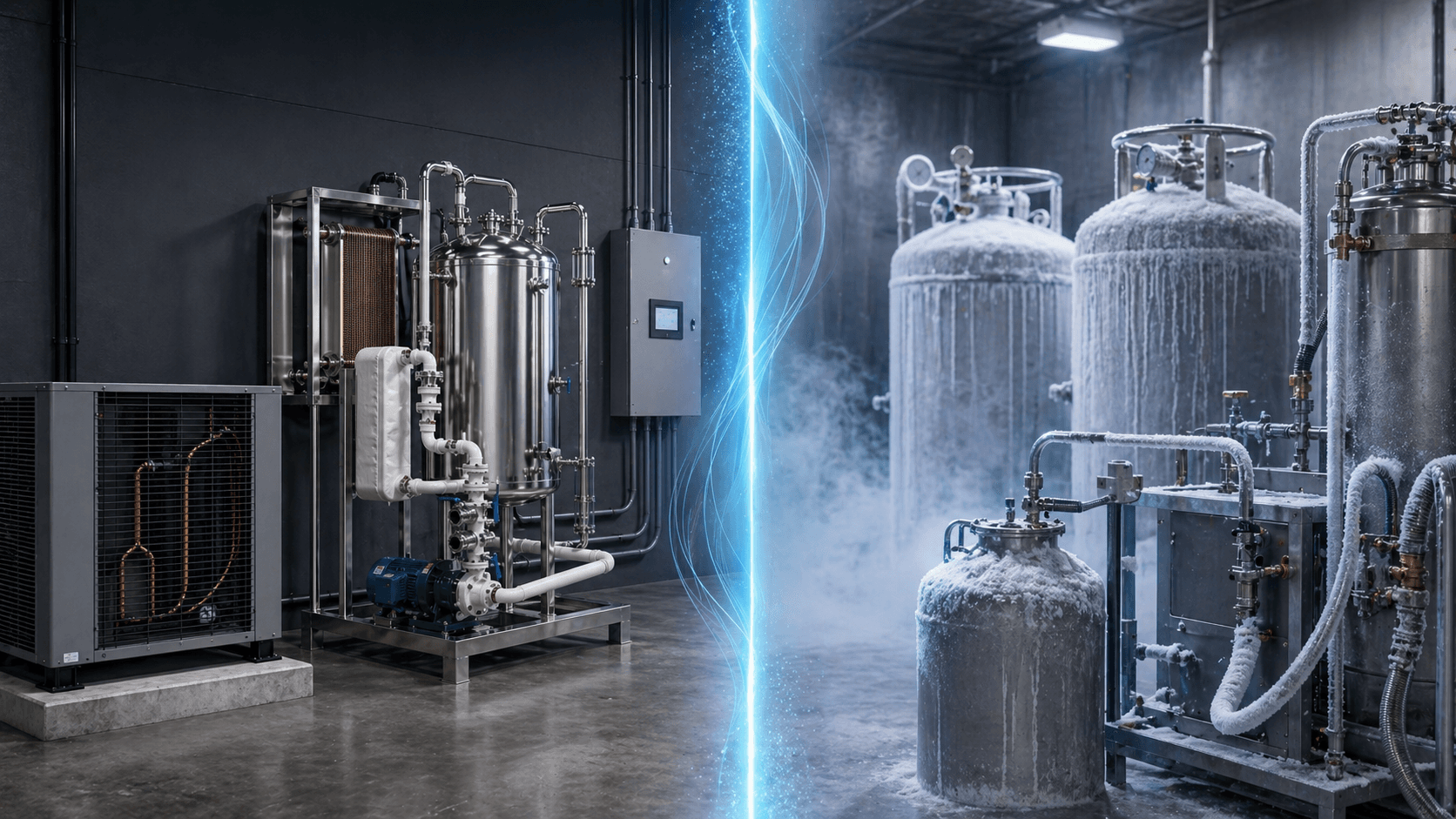
150gallons
Commercial scale operating capacity


BLAST Product Line
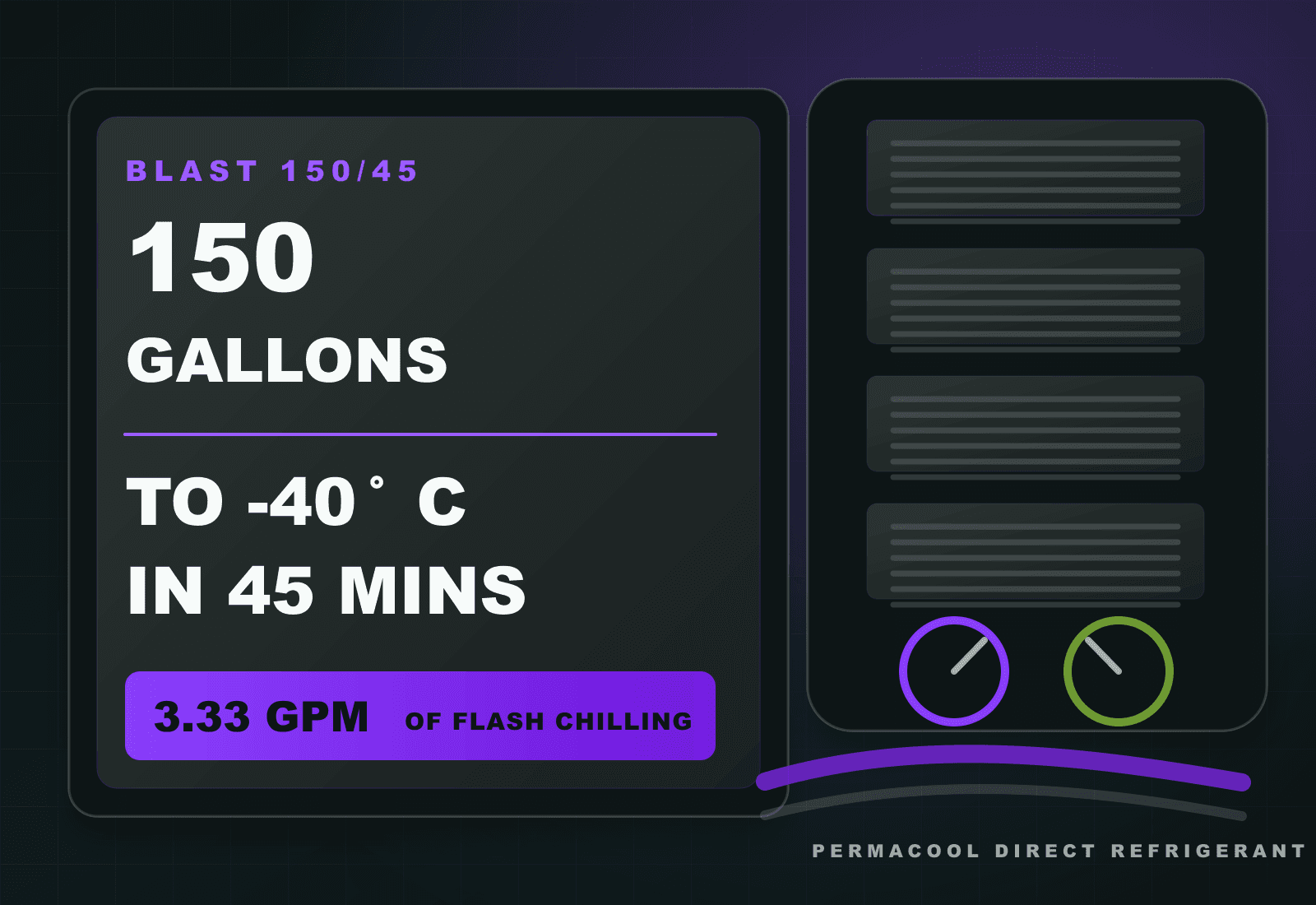
Flash-chill 150 gallons of ethanol to −40 °C in 45 minutes, with 3.33 GPM of flash chilling for commercial extraction workflows.
Commercial scale operating capacity
Room temperature to −40 °C — continuous-duty 24/7 operation
Full tank flash chilling performance average
BLAST 150/45 Breakdown
The 150/45 gives extraction labs 150 gallons of cold ethanol capacity, a predictable 45-minute pull-down target, and a production refrigeration platform for commercial daily use.
The BLAST 150/45 is Perma Cool's standard 150-gallon ethanol pre-chiller for commercial labs that need real production capacity without jumping into the largest tank class.
The name is literal: 150 gallons of ethanol chilled from room temperature to −40 °C in 45 minutes, or about 3.33 gallons per minute of chilling performance.
If the 60/45 is the entry production system, the 150/45 is the standard mid-size workhorse for commercial extraction teams.
What It's Built For
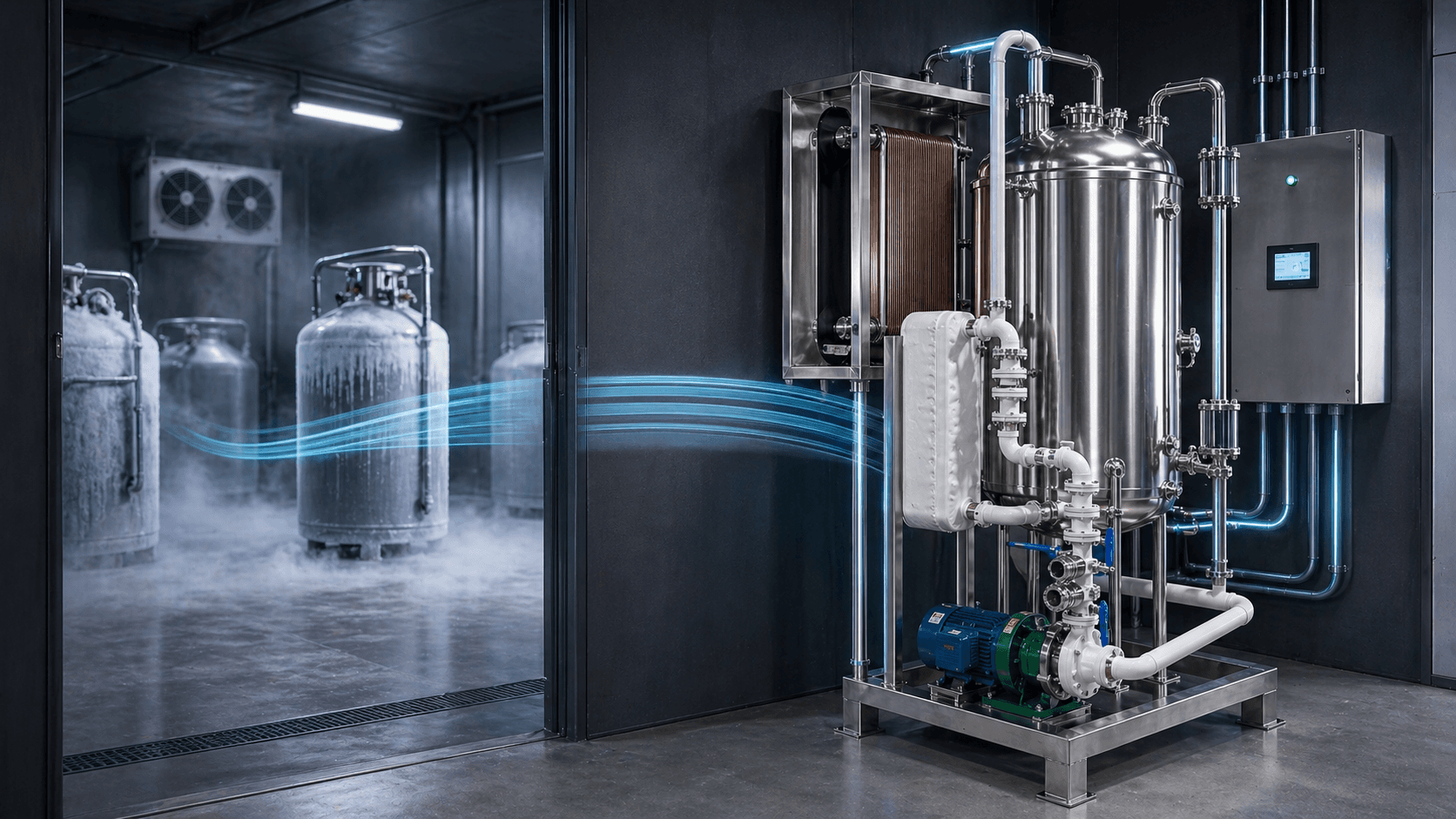
Instead of waiting on consumables or improvised freezer workflows, the BLAST 150/45 gives the lab a dedicated electric chilling platform built around repeatable ethanol processing.
The BLAST 150/45 is built for labs moving beyond small-batch chilling but not yet ready for the larger 240-gallon class.
A 45-minute pull-down window gives operators a chilling target they can build daily extraction schedules around.
The system supports the extract, return, re-chill, and repeat rhythm of ethanol processing with less waiting on slow recovery.
Perma Cool controls give operators process visibility, while compressor self-protection and control logic help protect major refrigeration components.
System Overview
Scan the system by what matters in production: pull-down speed, repeatability, controls, and facility fit.
Performance Profile
The BLAST 150/45 sits in the middle of the BLAST lineup: more capacity than the compact 60/45, with a production footprint designed for growing extraction schedules.
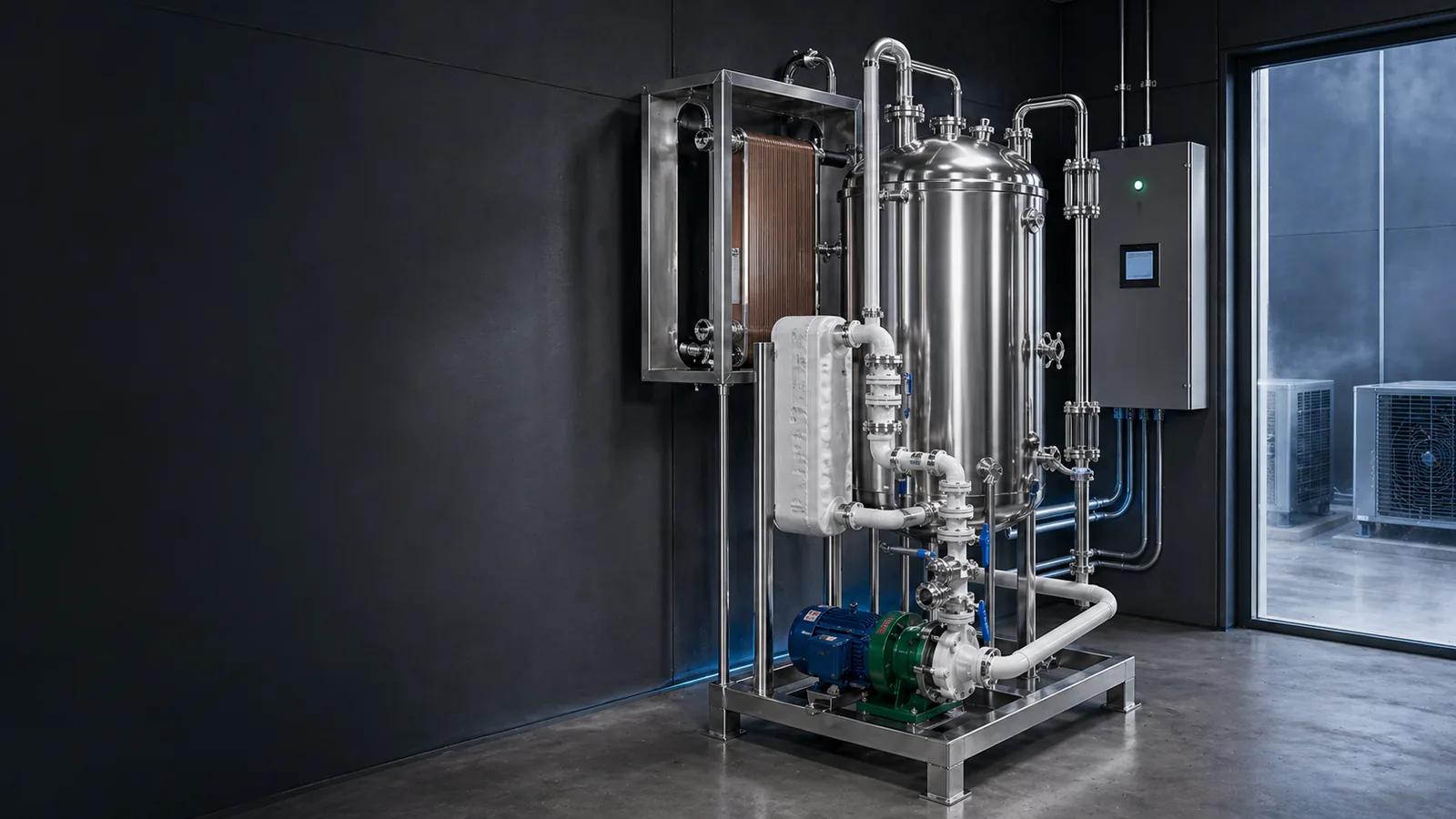
System Architecture
The BLAST 150/45 uses a hardier low-temperature refrigeration setup for production use, with direct refrigerant chilling and HVAC condenser integration.
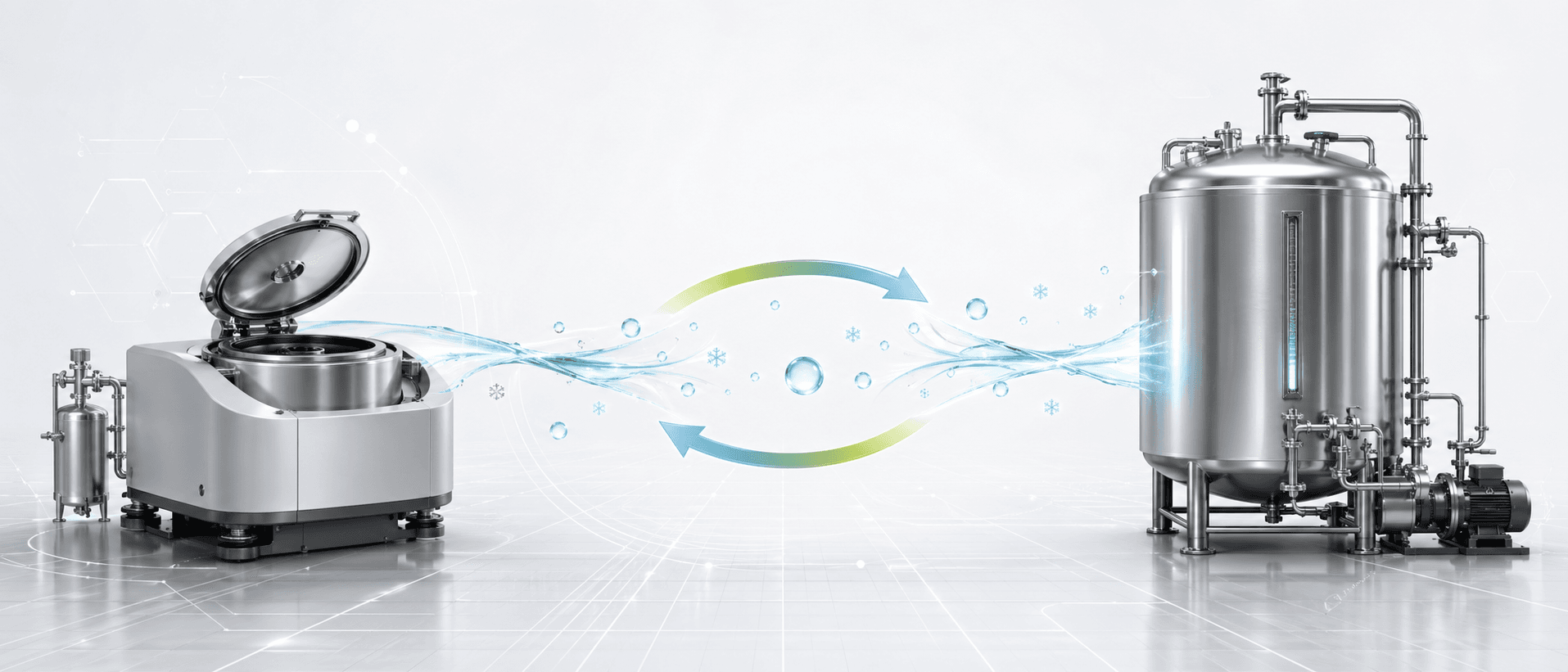
Workflow Fit
Fast re-chill performance supports extract, return, re-chill, and repeat workflows where each gallon of ethanol needs to carry more value.
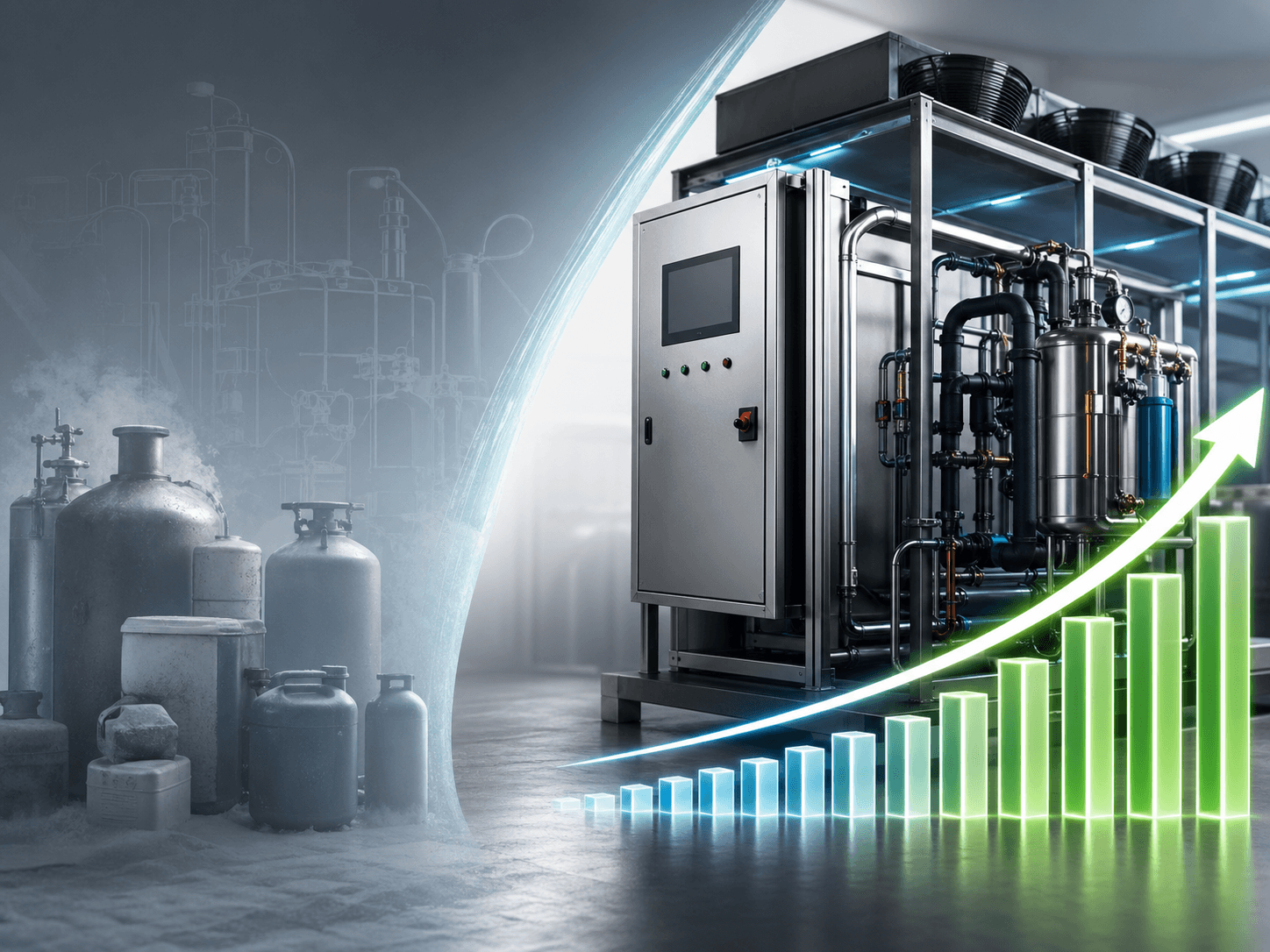
Operating Model
Replacing consumable-heavy chilling with electric process equipment helps operators reduce supply-chain friction and improve production confidence.
Extraction Workflow
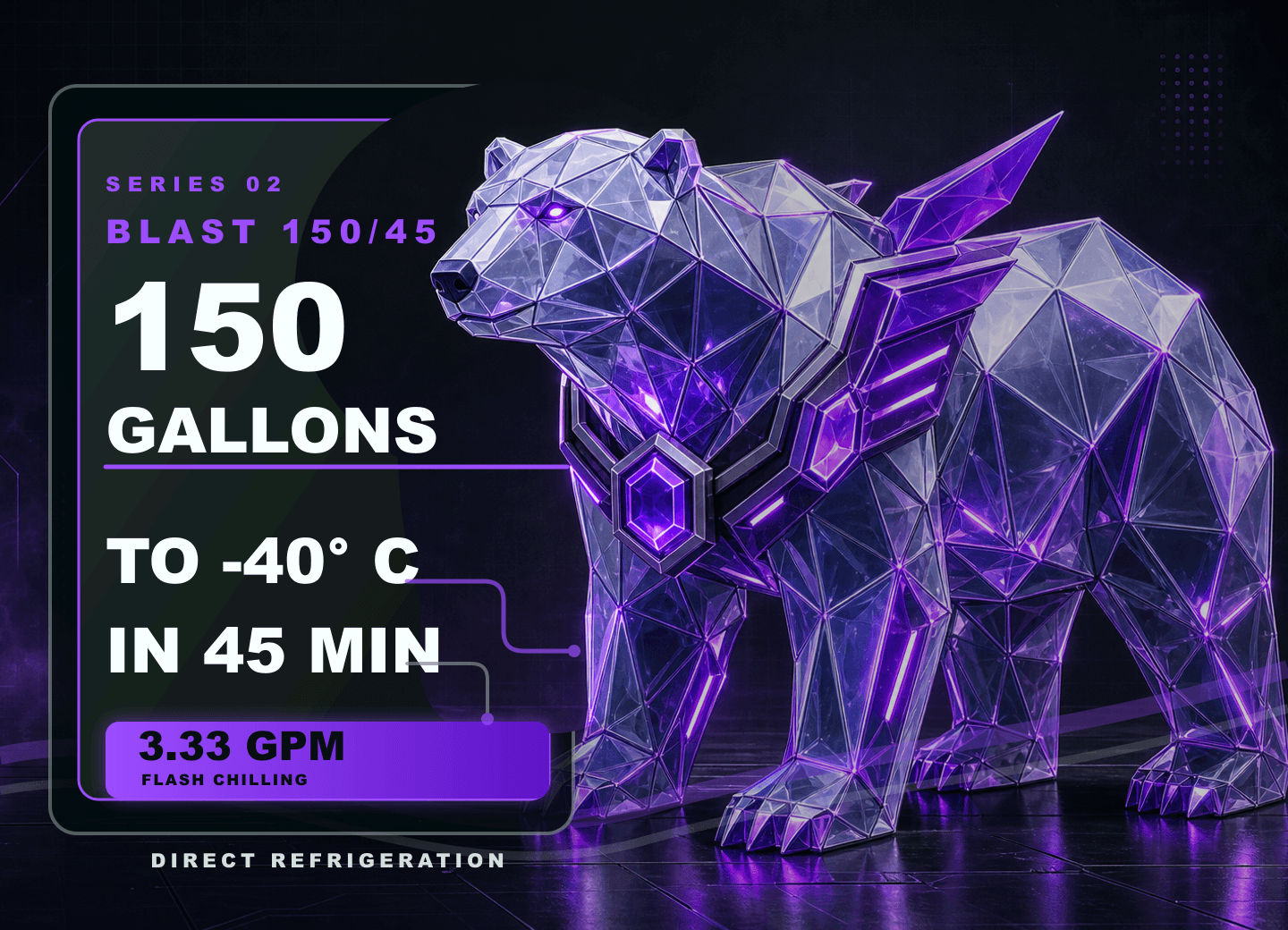
Bring 150 gallons of ethanol down to extraction-ready low temperature with a defined 45-minute performance target.
Use cold ethanol in the extraction process while protecting product quality and operating consistency.
Return the ethanol to the chiller, recover temperature, and prepare it for the next pass through fresh biomass.
Compressor self-protection and Perma Cool control logic help the refrigeration platform handle changing extraction-room conditions.
Highlights
Refrigeration Architecture
The BLAST 150/45 is built for direct refrigerant chilling, which means the equipment is focused on moving heat out of the ethanol process efficiently instead of relying on consumable cryogenic media.
Best Customer Fit
Learning Center
Compare chilling methods, reduce LN2 dependency, and plan system fit with practical guides built for extraction operators.
Visit Learning Center